
What Monarch does well
Monarch takes shared finances seriously in a way most of the category does not. Its site leads with a dedicated section for couples, describes tagging a partner to review transactions, and describes contributing toward goals together while keeping money in separate accounts. It ships on iOS, Android, and the web, and runs a programme for financial professionals.
If you and a partner want one shared view of a combined financial life, that is a real product and it is aimed squarely at you.
Collaboration is not settlement
Monarch's shared features are about seeing the same picture together: tagging, shared budgets, shared goals. Nobody owes anybody anything.
A lot of shared money is not like that. Roommates split rent. Unmarried partners keep finances separate on purpose. Co-parents divide a child's costs. Siblings share a parent's care. In each case there is a balance owed, it needs evidence behind it, and the other person is not joining your household.
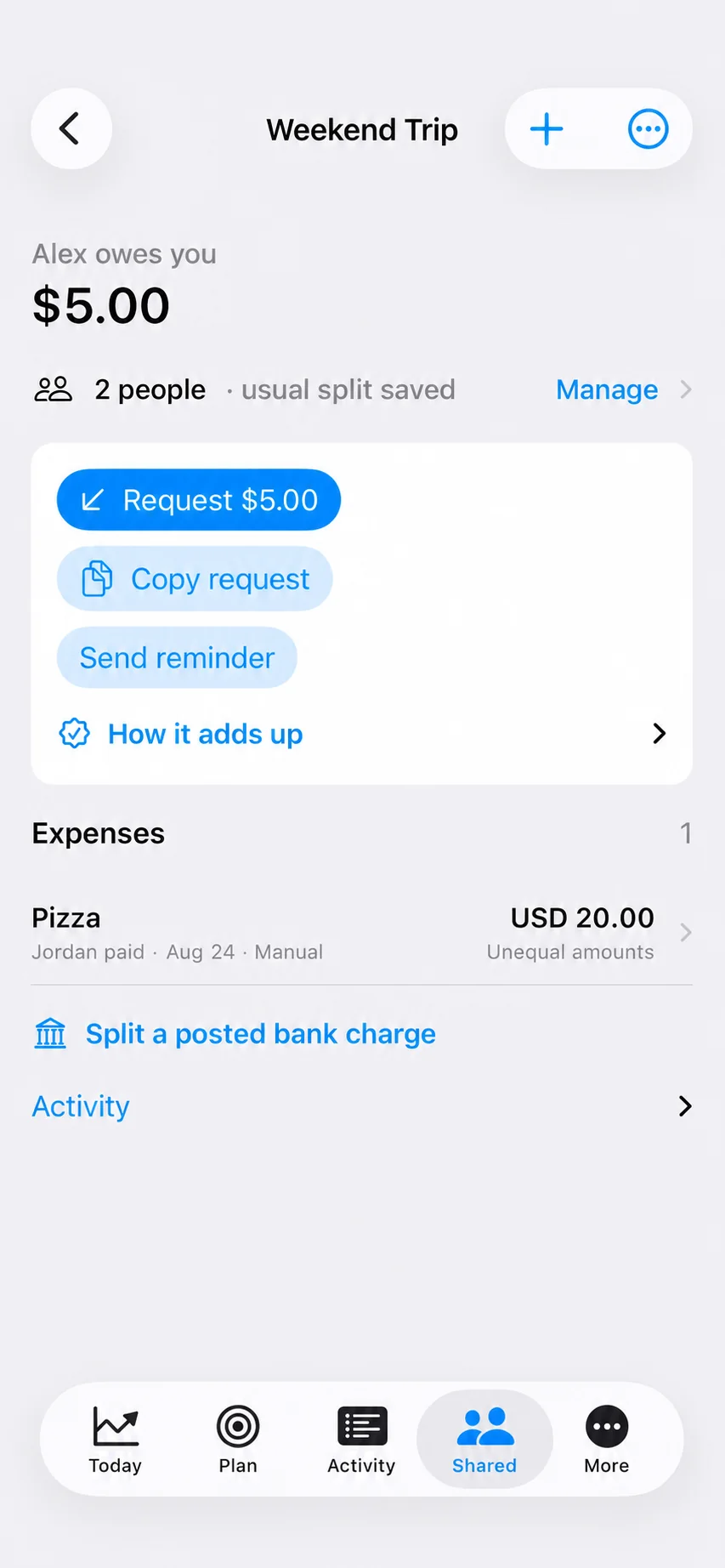
Footnote is built for that case: a running balance per person, each line traceable to the bank row that created it, and a settle-up the other person can act on without creating an account.
Equity compensation
Vest schedules, per-lot cost basis, withholding rates, and employer concentration measured by underlying security rather than by account name. None of it is available through a bank connection, so it has to come from the documents you already receive.
Bring your history
Footnote imports a Monarch CSV export. Accounts are matched by shared transactions rather than by name, so history lands against the right connection instead of a lookalike.